



Bucephalandra: The Ultimate Guide to Growing One of Aquascaping's Most Beautiful Plants
Bucephalandra: The Ultimate Guide to Growing One of Aquascaping's Most Beautiful Plants

If you've spent any time admiring nature aquariums, you've almost certainly come across Bucephalandra. Often simply called Buce, these fascinating plants have become one of the most sought-after epiphytes in the aquascaping hobby. With shimmering leaves, unique textures, and incredible colour variation, it's easy to see why they have become favourites amongst both beginners and collectors.
Despite their premium appearance, Bucephalandra are surprisingly easy to keep and can thrive in everything from low-tech shrimp tanks to high-end CO₂ aquascapes. At Horizon Aquatics, we stock a carefully selected range of Bucephalandra, from easy everyday favourites through to our Premium Buce Collection for hobbyists looking for something truly special.
What is Bucephalandra?
Bucephalandra are epiphyte plants native to the island of Borneo, where they naturally grow attached to rocks and driftwood in fast-flowing rainforest streams. Like Anubias and Java Fern, they grow from a thick rhizome that should always be left exposed rather than buried beneath the substrate.
Their biggest attraction is their incredible diversity. No two varieties look exactly the same. Some have long narrow leaves, others have rounded foliage, while many display metallic blue, purple or bronze iridescence when viewed under aquarium lighting.
Bucephalandra Species Available at Horizon Aquatics
Whether you're building your first planted aquarium or expanding an established collection, Horizon Aquatics offers a fantastic selection of Bucephalandra varieties.
Some of our favourites include:
-
Bucephalandra Belindae – Larger, glossy dark green leaves that create a bold feature on wood or stone.
-
Bucephalandra Kedagang – One of the hobby's most recognisable varieties with beautifully rippled foliage.
-
Bucephalandra Red – Produces attractive darker tones with subtle red highlights.
-
Bucephalandra Wavy Green 'Bukit Kelam' – Elegant flowing leaf margins with excellent texture.
-
Bucephalandra Theia – A stunning collector's variety with refined leaf shape and rich colouration.
For enthusiasts wanting something truly unique, our Horizon Aquatics Premium Buce Range includes carefully selected collector specimens featuring exceptional colour, texture and rarity. These plants are perfect for creating eye-catching focal points within high-end aquascapes or building an impressive Buce collection over time.

Easier Than Many People Think
Bucephalandra often get a reputation for being delicate simply because they're expensive, but in reality they're incredibly forgiving.
Like Anubias, they tolerate lower light levels and don't require CO₂ injection. However, one advantage Bucephalandra have is that they generally cope with slightly higher light levels than Anubias, allowing them to develop stronger colours and more noticeable iridescence without immediately becoming algae magnets, provided the aquarium remains balanced.
They perform brilliantly in:
-
Low-tech planted aquariums
-
CO₂ injected nature aquascapes
-
Shrimp aquariums
-
Betta tanks
-
Nano aquariums
-
Large display aquascapes
Stable water conditions, gentle fertilisation and patience will always reward you with healthier plants.
How to Plant Bucephalandra
One of the biggest mistakes beginners make is burying the rhizome.
Instead, attach your Bucephalandra to:
-
Driftwood
-
Rocks
-
Lava stone
-
Aquarium décor
You can use aquarium-safe glue, cotton thread or fishing line until the roots naturally grip the surface.

What Are The Little White Dots?
One of the most common questions we hear is:
"Why does my Bucephalandra have tiny white spots all over the leaves?"
The good news is...they're completely normal.
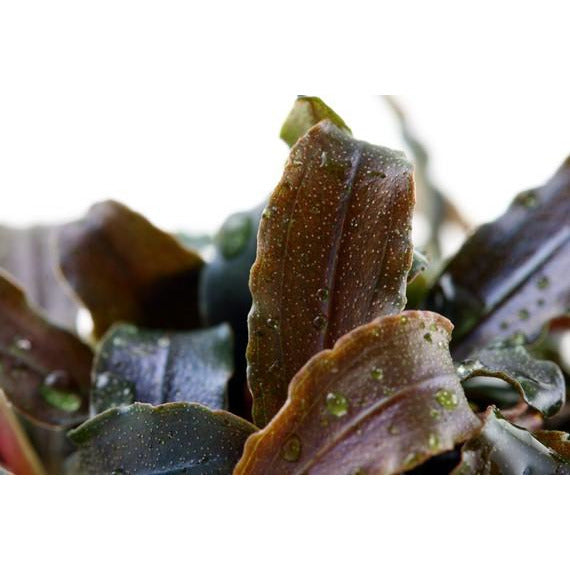
Many Bucephalandra species naturally produce tiny white speckles across their leaves. These aren't disease, algae, eggs or nutrient deficiencies, they're simply part of the plant's natural appearance.
Combined with their metallic blue or purple shimmer, these dots give many Buce varieties their distinctive premium look.
So if your Buce has developed these tiny white flecks, it's usually something to celebrate rather than worry about.
Emersed vs Submerged Growth
Most Bucephalandra sold commercially are grown emersed, meaning they're cultivated above water in extremely humid greenhouses.
When first introduced into your aquarium, it's perfectly normal for some of the older leaves to melt away while the plant adjusts to submerged conditions.
Don't panic.
As long as the rhizome stays healthy and firm, new underwater leaves will begin emerging over the following weeks. These submerged leaves are often smaller, thicker and even more colourful than the original emersed foliage.
Patience is key, Bucephalandra reward slow, steady growth.
Will My Buce Flower?
Yes!
One of the most enjoyable surprises with Bucephalandra is that healthy plants frequently produce flower, even underwater.
Their small white flowers emerge directly from the rhizome and can remain open for several days. While underwater flowers rarely produce viable seed in the aquarium, they are an excellent sign that your plant is happy and well established.
Many experienced aquascapers actually use flowering as an indicator that their aquarium conditions are stable.

How Bucephalandra Produces New Plants
Unlike fast-growing stem plants, Bucephalandra spreads slowly by extending its rhizome.
As the rhizome grows, it naturally produces new shoots and leaf clusters, gradually forming larger clumps over time.
Once established, these clumps can simply be divided by cutting the rhizome between growth points with clean scissors or a sharp blade. Each healthy section will continue growing into a brand new plant.
This slow but reliable method means your favourite Buce variety can gradually multiply throughout your aquascape over the years.
Choose Ethically Sourced Bucephalandra
As Bucephalandra has grown in popularity, so too has the importance of buying plants from responsible sources.
Many Bucephalandra species are native to the rainforests of Borneo, where they grow attached to rocks and wood alongside streams. Unfortunately, in the past, some plants entered the aquarium trade after being collected directly from the wild. Unsustainable harvesting can damage fragile habitats and reduce natural populations of these remarkable plants.
Today, there is no need to remove Bucephalandra from nature. Through propagation and tissue culture, growers can produce healthy, high-quality plants without impacting wild ecosystems.
When purchasing Bucephalandra, always choose plants from retailers who prioritise ethically grown and sustainably propagated stock. Not only does this help protect wild habitats, but these cultivated plants are often healthier, better adapted to aquarium life, and free from many of the pests that can accompany wild-collected specimens.
At Horizon Aquatics, we're committed to sourcing Bucephalandra responsibly. Whether you're choosing from our standard range or our Premium Buce Collection, you can enjoy these incredible plants knowing you're supporting sustainable practices that help preserve their natural habitats for future generations.
A Plant That Gets Better With Age
Perhaps the best thing about Bucephalandra is that they improve over time.
Unlike many fast-growing plants that need constant trimming, Buce become more attractive each year as they slowly develop larger clumps, stronger colouration and mature root systems that naturally wrap around wood and stone.
Whether you're creating your very first aquascape or building an advanced collector aquarium, Bucephalandra offer an unbeatable combination of beauty, durability and character.
If you're looking to start your collection, browse the full range at Horizon Aquatics, including our carefully selected Premium Buce Collection, featuring some of the finest Bucephalandra available in the UK.
