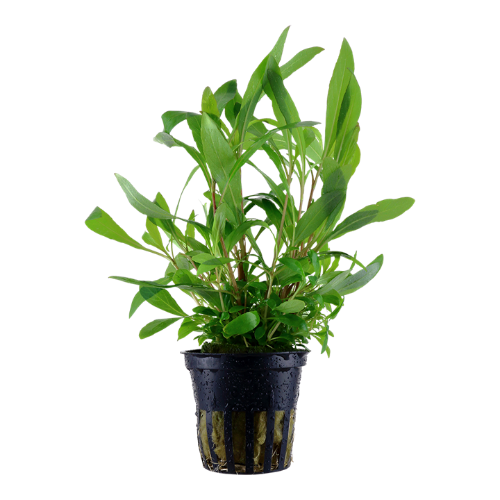
Tropica 1-2 Grow Schismatoglottis prietoi Schismatoglottis prietoi is a charming and versatile foreground plant that closely resembles small Anubias species, with its smooth, elliptic leaves measuring 3–8 cm in length. Native to the rivers of the Philippines, it naturally forms dense clusters along the riverbeds, creating a rich carpet of...
Schismatoglottis prietoi is a charming and versatile foreground plant that closely resembles small Anubias species, with its smooth, elliptic leaves measuring 3–8 cm in length. Native to the rivers of the Philippines, it naturally forms dense clusters along the riverbeds, creating a rich carpet of green that translates beautifully into aquarium settings. Its compact structure and adaptability make it an excellent choice for aquascapers seeking a low-maintenance yet visually appealing plant.
Appearance
This species features neat, oval-shaped leaves in a vibrant mid-green tone, growing from a creeping stolon that gradually expands outward. Its tidy, compact growth pattern brings a natural, woodland feel to the aquarium, offering a softer aesthetic compared to harder-edged stem plants.
How to Use in the Aquarium
Schismatoglottis prietoi is remarkably flexible in its placement. It grows reliably when planted directly into the substrate, where it will slowly spread via runners. Alternatively, like Anubias, it can be attached to wood or rock, making it ideal for nature-style aquascapes or shaded hardscape features. Its small size makes it especially suited for the foreground or midground of nano and medium tanks.
Lighting & CO₂ Requirements
A highly undemanding plant, it thrives even in low-light conditions, making it perfect for low-tech aquariums. CO₂ is optional, although supplementation can enhance growth and promote denser clusters. Its tolerance for a wide range of water conditions means it performs well in both beginner and advanced setups.
Maintenance
With a moderate growth rate, maintenance is minimal and primarily involves trimming or controlling runners to shape the plant’s spread. Its hardy nature means it adapts well to most aquarium environments, making it a reliable choice for aquascapers of all experience levels.